Now that we have published a GitHub Release that contains arm64 musl
artifacts for Linux, update the following scripts to take advantage of
them:

- `dotslash-config.json` now uses musl artifacts for the `linux-aarch64`
target
- `install_native_deps.sh` for the TypeScript CLI now includes
`codex-linux-sandbox-aarch64-unknown-linux-musl` instead of
`codex-linux-sandbox-aarch64-unknown-linux-gnu` for sandboxing
- `codex-cli/bin/codex.js` now checks for `aarch64-unknown-linux-musl`
artifacts instead of `aarch64-unknown-linux-gnu` ones
This does not implement the full Login with ChatGPT experience, but it
should unblock people.

**What works**

* The `codex` multitool now has a `login` subcommand, so you can run
`codex login`, which should write `CODEX_HOME/auth.json` if you complete
the flow successfully. The TUI will now read the `OPENAI_API_KEY` from
`auth.json`.
* The TUI should refresh the token if it has expired and the necessary
information is in `auth.json`.
* There is a `LoginScreen` in the TUI that tells you to run `codex
login` if both (1) your model provider expects to use `OPENAI_API_KEY`
as its env var, and (2) `OPENAI_API_KEY` is not set.

**What does not work**

* The `LoginScreen` does not support the login flow from within the TUI.
Instead, it tells you to quit, run `codex login`, and then run `codex`
again.
* `codex exec` does read from `auth.json` yet, nor does it direct the
user to go through the login flow if `OPENAI_API_KEY` is not be found.
* The `maybeRedeemCredits()` function from `get-api-key.tsx` has not
been ported from TypeScript to `login_with_chatgpt.py` yet:


a67a67f325/codex-cli/src/utils/get-api-key.tsx (L84-L89)

**Implementation**

Currently, the OAuth flow requires running a local webserver on
`127.0.0.1:1455`. It seemed wasteful to incur the additional binary cost
of a webserver dependency in the Rust CLI just to support login, so
instead we implement this logic in Python, as Python has a `http.server`
module as part of its standard library. Specifically, we bundle the
contents of a single Python file as a string in the Rust CLI and then
use it to spawn a subprocess as `python3 -c
{{SOURCE_FOR_PYTHON_SERVER}}`.

As such, the most significant files in this PR are:

```
codex-rs/login/src/login_with_chatgpt.py
codex-rs/login/src/lib.rs
```

Now that the CLI may load `OPENAI_API_KEY` from the environment _or_
`CODEX_HOME/auth.json`, we need a new abstraction for reading/writing
this variable, so we introduce:

```
codex-rs/core/src/openai_api_key.rs
```

Note that `std::env::set_var()` is [rightfully] `unsafe` in Rust 2024,
so we use a LazyLock<RwLock<Option<String>>> to store `OPENAI_API_KEY`
so it is read in a thread-safe manner.

Ultimately, it should be possible to go through the entire login flow
from the TUI. This PR introduces a placeholder `LoginScreen` UI for that
right now, though the new `codex login` subcommand introduced in this PR
should be a viable workaround until the UI is ready.

**Testing**

Because the login flow is currently implemented in a standalone Python
file, you can test it without building any Rust code as follows:

```
rm -rf /tmp/codex_home && mkdir /tmp/codex_home
CODEX_HOME=/tmp/codex_home python3 codex-rs/login/src/login_with_chatgpt.py
```

For reference:

* the original TypeScript implementation was introduced in
https://github.com/openai/codex/pull/963
* support for redeeming credits was later added in
https://github.com/openai/codex/pull/974
Added logic so that when we run `./scripts/stage_release.sh --native`
(for the `@native` version of the Node module), we drop a `use-native`
file next to `codex.js`. If present, `codex.js` will now run the Rust
CLI.

Ran `./scripts/stage_release.sh --native` and verified that when the
running `codex.js` in the staged folder:

```
$ /var/folders/wm/f209bc1n2bd_r0jncn9s6j_00000gp/T/tmp.efvEvBlSN6/bin/codex.js --version
codex-cli 0.0.2505220956
```

it ran the expected Rust version of the CLI, as desired.

While here, I also updated the Rust version to one that I cut today,
which includes the new shell environment policy config option:
https://github.com/openai/codex/pull/1061. Note this may "break" some
users if the processes spawned by Codex need extra environment
variables. (We are still working to determine what the right defaults
should be for this option.)
## Summary
- add `--login` and `--free` flags to cli help
- handle `--login` and `--free` logic in cli
- factor out redeem flow into `maybeRedeemCredits`
- call new helper from login callback
When running `npm test` on `codex-cli`, the test
`agent-cancel-prev-response.test.ts` logs a significant body of text to
console for no obvious reason.

This is not helpful, as it makes test logs messy and far longer.

This change deletes the `console.log(...)` that produces the behavior.
- A new “/sessions” command is available for browsing previous sessions,
as shown in the updated slash command list

- The CLI now documents and parses a new “--history” flag to browse past
sessions from the command line

- A dedicated `SessionsOverlay` component loads session metadata and
allows toggling between viewing and resuming sessions

- When the sessions overlay is opened during a chat, selecting a session
can either show the saved rollout or resume it
## Summary
- fix quoting issues in `/diff` to correctly handle files with special
characters
- add regression test for `getGitDiff` when filenames contain `$`
- relax timeout in raw-exec-process-group test

Fixes https://github.com/openai/codex/issues/943

## Testing
- `pnpm test`
More about codespell: https://github.com/codespell-project/codespell .

I personally introduced it to dozens if not hundreds of projects already
and so far only positive feedback.

CI workflow has 'permissions' set only to 'read' so also should be safe.

Let me know if just want to take typo fixes in and get rid of the CI

---------

Signed-off-by: Yaroslav O. Halchenko <debian@onerussian.com>
Right now since the repo is having two different implementations of
codex, flake was updated to work with both typescript implementation and
rust implementation
Adds a space so that sequential citations have some more breathing room.

As I had to update the tests for this change, I also introduced a
`toDiffableString()` helper to make the test easier to update as we make
formatting changes to the output.
This PR uses [`pnpm
patch`](https://www.petermekhaeil.com/til/pnpm-patch/) to pull in the
following proposed fixes for `marked-terminal`:

* https://github.com/mikaelbr/marked-terminal/pull/366
* https://github.com/mikaelbr/marked-terminal/pull/367

This adds a substantial test to `codex-cli/tests/markdown.test.tsx` to
verify the new behavior.

Note that one of the tests shows two citations being split across a line
even though the rendered version would fit comfortably on one line.
Changing this likely requires a subtle fix to `marked-terminal` to
account for "rendered length" when determining line breaks.
This PR introduces the following type:

```typescript
export type FileOpenerScheme = "vscode" | "cursor" | "windsurf";
```

and uses it as the new type for a `fileOpener` option in `config.json`.
If set, this will be used to linkify file annotations in the output
using the URI-based file opener supported in VS Code-based IDEs.

Currently, this does not pass:

Updated `codex-cli/tests/markdown.test.tsx` to verify the new behavior.
Note it required mocking `supports-hyperlinks` and temporarily modifying
`chalk.level` to yield the desired output.
Note the high-level motivation behind this change is to avoid the need
to make temporary changes in the source tree in order to cut a release
build since that runs the risk of leaving things in an inconsistent
state in the event of a failure. The existing code:

```
import pkg from "../../package.json" assert { type: "json" };
```

did not work as intended because, as written, ESBuild would bake the
contents of the local `package.json` into the release build at build
time whereas we want it to read the contents at runtime so we can use
the `package.json` in the tree to build the code and later inject a
modified version into the release package with a timestamped build
version.

Changes:

* move `CLI_VERSION` out of `src/utils/session.ts` and into
`src/version.ts` so `../package.json` is a correct relative path both
from `src/version.ts` in the source tree and also in the final
`dist/cli.js` build output
* change `assert` to `with` in `import pkg` as apparently `with` became
standard in Node 22
* mark `"../package.json"` as external in `build.mjs` so the version is
not baked into the `.js` at build time

After using `pnpm stage-release` to build a release version, if I use
Node 22.0 to run Codex, I see the following printed to stderr at
startup:

```
(node:71308) ExperimentalWarning: Importing JSON modules is an experimental feature and might change at any time
(Use `node --trace-warnings ...` to show where the warning was created)
```

Note it is a warning and does not prevent Codex from running.

In Node 22.12, the warning goes away, but the warning still appears in
Node 22.11. For Node 22, 22.15.0 is the current LTS version, so LTS
users will not see this.

Also, something about moving the definition of `CLI_VERSION` caused a
problem with the mocks in `check-updates.test.ts`. I asked Codex to fix
it, and it came up with the change to the test configs. I don't know
enough about vitest to understand what it did, but the tests seem
healthy again, so I'm going with it.
This PR fixes a potential path traversal vulnerability by ensuring all
paths are properly normalized in the `resolvePathAgainstWorkdir`
function.

## Changes
- Added path normalization for both absolute and relative paths
- Ensures normalized paths are used in all subsequent operations
- Prevents potential path traversal attacks through non-normalized paths

This minimal change addresses the security concern without adding
unnecessary complexity, while maintaining compatibility with existing
code.
This PR introduces an optional build flag, `--native`, that will build a
version of the Codex npm module that:

- Includes both the Node.js and native Rust versions (for Mac and Linux)
- Will run the native version if `CODEX_RUST=1` is set
- Runs the TypeScript version otherwise

Note this PR also updates the workflow URL to
https://github.com/openai/codex/actions/runs/14872557396, as that is a
build from today that includes everything up through
https://github.com/openai/codex/pull/843.

Test Plan:

In `~/code/codex/codex-cli`, I ran:

```
pnpm stage-release --native
```

The end of the output was:

```
Staged version 0.1.2505121317 for release in /var/folders/wm/f209bc1n2bd_r0jncn9s6j_00000gp/T/tmp.xd2p5ETYGN
Test Node:
    node /var/folders/wm/f209bc1n2bd_r0jncn9s6j_00000gp/T/tmp.xd2p5ETYGN/bin/codex.js --help
Test Rust:
    CODEX_RUST=1 node /var/folders/wm/f209bc1n2bd_r0jncn9s6j_00000gp/T/tmp.xd2p5ETYGN/bin/codex.js --help
Next:  cd "/var/folders/wm/f209bc1n2bd_r0jncn9s6j_00000gp/T/tmp.xd2p5ETYGN" && npm publish --tag native
```

I verified that running each of these commands ran the expected version
of Codex.

While here, I also added `bin` to the `files` list in `package.json`,
which should have been done as part of
https://github.com/openai/codex/pull/757, as that added new entries to
`bin` that were matched by `.gitignore` but should have been included in
a release.
* Add flexMode to stored config, and use it during config loading unless
the flag is explicitly passed.
* If the config asks for flexMode and the model doesn't support it,
silently disable flexMode.
Resolves#803
- Added ArceeAI as a provider  - https://conductor.arcee.ai/v1
- Compatible with ArceeAI SLMs (Virtuoso, Maestro)
- Works with ArceeAI's Conductor auto‑router models (auto, auto‑tool),
once #817 is merged
- Fixes guard by using optional chaining to safely check
chunk.choices?.[0] before accessing.
- Currently, accessing chunk.choices[0] without checking could throw if
choices was missing from the chunk.
Reasoning effort was already available, but not expressed into the help
text, so it was non-discoverable.

Other issues discovered, but will fix in separate PR since they are
larger:
* #816 reasoningEffort isn't displayed in the terminal-header, making it
rather hard to see the state of configuration
* I don't think the config file setting works, as the CLI option always
"wins" and overwrites it
Fix: retry on server_error responses that lack an HTTP status code

### What happened

1. An OpenAI endpoint returned a **5xx** (transient server-side
failure).
2. The SDK surfaced it as an `APIError` with

{ "type": "server_error", "message": "...", "status": undefined }

           (The SDK does not always populate `status` for these cases.)
3. Our retry logic in `src/utils/agent/agent-loop.ts` determined

isServerError = typeof status === "number" && status >= 500;

Because `status` was *undefined*, the error was **not** recognised as
retriable, the exception bubbled out, and the CLI crashed with a stack
           trace similar to:

               Error: An error occurred while processing the request.
                   at .../cli.js:474:1514

### Root cause

The transient-error detector ignored the semantic flag type ===
"server_error" that the SDK provides when the numeric status is missing.

#### Fix (1 loc + comment)

Extend the check:

const status = errCtx?.status ?? errCtx?.httpStatus ??
errCtx?.statusCode;

const isServerError = (typeof status === "number" && status >= 500) ||
// classic 5xx
errCtx?.type === "server_error";                   // <-- NEW

Now the agent:

* Retries up to **5** times (existing logic) when the backend reports a
transient failure, even if `status` is absent.
* If all retries fail, surfaces the existing friendly system message
instead of an uncaught exception.

### Tests & validation

pnpm test # all suites green (17 agent-level tests now include this
path)
pnpm run lint    # 0 errors / warnings
pnpm run typecheck

A new unit-test file isn’t required—the behaviour is already covered by
tests/agent-server-retry.test.ts, which stubs type: "server_error" and
now passes with the updated logic.

### Impact

* No API-surface changes.
* Prevents CLI crashes on intermittent OpenAI outages.
* Adds robust handling for other providers that may follow the same
error-shape.
## Summary

This PR introduces support for Azure OpenAI as a provider within the
Codex CLI. Users can now configure the tool to leverage their Azure
OpenAI deployments by specifying `"azure"` as the provider in
`config.json` and setting the corresponding `AZURE_OPENAI_API_KEY` and
`AZURE_OPENAI_API_VERSION` environment variables. This functionality is
added alongside the existing provider options (OpenAI, OpenRouter,
etc.).

Related to #92

**Note:** This PR is currently in **Draft** status because tests on the
`main` branch are failing. It will be marked as ready for review once
the `main` branch is stable and tests are passing.

---

## What’s Changed

-   **Configuration (`config.ts`, `providers.ts`, `README.md`):**
- Added `"azure"` to the supported `providers` list in `providers.ts`,
specifying its name, default base URL structure, and environment
variable key (`AZURE_OPENAI_API_KEY`).
- Defined the `AZURE_OPENAI_API_VERSION` environment variable in
`config.ts` with a default value (`2025-03-01-preview`).
    -   Updated `README.md` to:
        -   Include "azure" in the list of providers.
- Add a configuration section for Azure OpenAI, detailing the required
environment variables (`AZURE_OPENAI_API_KEY`,
`AZURE_OPENAI_API_VERSION`) with examples.
- **Client Instantiation (`terminal-chat.tsx`, `singlepass-cli-app.tsx`,
`agent-loop.ts`, `compact-summary.ts`, `model-utils.ts`):**
- Modified various components and utility functions where the OpenAI
client is initialized.
- Added conditional logic to check if the configured `provider` is
`"azure"`.
- If the provider is Azure, the `AzureOpenAI` client from the `openai`
package is instantiated, using the configured `baseURL`, `apiKey` (from
`AZURE_OPENAI_API_KEY`), and `apiVersion` (from
`AZURE_OPENAI_API_VERSION`).
- Otherwise, the standard `OpenAI` client is instantiated as before.
-   **Dependencies:**
- Relies on the `openai` package's built-in support for `AzureOpenAI`.
No *new* external dependencies were added specifically for this Azure
implementation beyond the `openai` package itself.

---

## How to Test

*This has been tested locally and confirmed working with Azure OpenAI.*

1.  **Configure `config.json`:**
Ensure your `~/.codex/config.json` (or project-specific config) includes
Azure and sets it as the active provider:
    ```json
    {
      "providers": {
        // ... other providers
        "azure": {
          "name": "AzureOpenAI",
"baseURL": "https://YOUR_RESOURCE_NAME.openai.azure.com", // Replace
with your Azure endpoint
          "envKey": "AZURE_OPENAI_API_KEY"
        }
      },
      "provider": "azure", // Set Azure as the active provider
      "model": "o4-mini" // Use your Azure deployment name here
      // ... other config settings
    }
    ```
2.  **Set up Environment Variables:**
    ```bash
    # Set the API Key for your Azure OpenAI resource
    export AZURE_OPENAI_API_KEY="your-azure-api-key-here"

# Set the API Version (Optional - defaults to `2025-03-01-preview` if
not set)
# Ensure this version is supported by your Azure deployment and endpoint
    export AZURE_OPENAI_API_VERSION="2025-03-01-preview"
    ```
3.  **Get the Codex CLI by building from this PR branch:**
Clone your fork, checkout this branch (`feat/azure-openai`), navigate to
`codex-cli`, and build:
    ```bash
    # cd /path/to/your/fork/codex
    git checkout feat/azure-openai # Or your branch name
    cd codex-cli
    corepack enable
    pnpm install
    pnpm build
    ```
4.  **Invoke Codex:**
Run the locally built CLI using `node` from the `codex-cli` directory:
    ```bash
    node ./dist/cli.js "Explain the purpose of this PR"
    ```
*(Alternatively, if you ran `pnpm link` after building, you can use
`codex "Explain the purpose of this PR"` from anywhere)*.
5. **Verify:** Confirm that the command executes successfully and
interacts with your configured Azure OpenAI deployment.

---

## Tests

- [x] Tested locally against an Azure OpenAI deployment using API Key
authentication. Basic commands and interactions confirmed working.

---

## Checklist

- [x] Added Azure provider details to configuration files
(`providers.ts`, `config.ts`).
- [x] Implemented conditional `AzureOpenAI` client initialization based
on provider setting.
-   [x] Ensured `apiVersion` is passed correctly to the Azure client.
-   [x] Updated `README.md` with Azure OpenAI setup instructions.
- [x] Manually tested core functionality against a live Azure OpenAI
endpoint.
- [x] Add/update automated tests for the Azure code path (pending `main`
stability).

cc @theabhinavdas @nikodem-wrona @fouad-openai @tibo-openai (adjust as
needed)

---

I have read the CLA Document and I hereby sign the CLA
This Pull Request addresses an issue where the output of commands
executed in the raw-exec utility was being truncated due to restrictive
limits on the number of lines and bytes collected. The truncation caused
the message [Output truncated: too many lines or bytes] to appear when
processing large outputs, which could hinder the functionality of the
CLI.

Changes Made

Increased the maximum output limits in the
[createTruncatingCollector](https://github.com/openai/codex/pull/575)
utility:
Bytes: Increased from 10 KB to 100 KB.
Lines: Increased from 256 lines to 1024 lines.
Installed the @types/node package to resolve missing type definitions
for [NodeJS](https://github.com/openai/codex/pull/575) and
[Buffer](https://github.com/openai/codex/pull/575).
Verified and fixed any related errors in the
[createTruncatingCollector](https://github.com/openai/codex/pull/575)
implementation.

Issue Solved:

This PR ensures that larger outputs can be processed without truncation,
improving the usability of the CLI for commands that generate extensive
output. https://github.com/openai/codex/issues/509

---------

Co-authored-by: Michael Bolin <bolinfest@gmail.com>
Building on top of https://github.com/openai/codex/pull/757, this PR
updates Codex to use the Landlock executor binary for sandboxing in the
Node.js CLI. Note that Codex has to be invoked with either `--full-auto`
or `--auto-edit` to activate sandboxing. (Using `--suggest` or
`--dangerously-auto-approve-everything` ensures the sandboxing codepath
will not be exercised.)
When I tested this on a Linux host (specifically, `Ubuntu 24.04.1 LTS`),
things worked as expected: I ran Codex CLI with `--full-auto` and then
asked it to do `echo 'hello mbolin' into hello_world.txt` and it
succeeded without prompting me.
However, in my testing, I discovered that the sandboxing did *not* work
when using `--full-auto` in a Linux Docker container from a macOS host.
I updated the code to throw a detailed error message when this happens:

This introduces `./codex-cli/scripts/stage_release.sh`, which is a shell
script that stages a release for the Node.js module in a temp directory.
It updates the release to include these native binaries:

```
bin/codex-linux-sandbox-arm64
bin/codex-linux-sandbox-x64
```

though this PR does not update Codex CLI to use them yet.

When doing local development, run
`./codex-cli/scripts/install_native_deps.sh` to install these in your
own `bin/` folder.

This PR also updates `README.md` to document the new workflow.

---
[//]: # (BEGIN SAPLING FOOTER)
Stack created with [Sapling](https://sapling-scm.com). Best reviewed
with [ReviewStack](https://reviewstack.dev/openai/codex/pull/757).
* #763
* __->__ #757
## `0.1.2504301751`

### 🚀 Features

- User config api key (#569)
- `@mention` files in codex (#701)
- Add `--reasoning` CLI flag (#314)
- Lower default retry wait time and increase number of tries (#720)
- Add common package registries domains to allowed-domains list (#414)

### 🪲 Bug Fixes

- Insufficient quota message (#758)
- Input keyboard shortcut opt+delete (#685)
- `/diff` should include untracked files (#686)
- Only allow running without sandbox if explicitly marked in safe
container (#699)
- Tighten up check for /usr/bin/sandbox-exec (#710)
- Check if sandbox-exec is available (#696)
- Duplicate messages in quiet mode (#680)
Solves #700
## State of the World Before
Prior to this PR, when users wanted to share file contents with Codex,
they had two options:
- Manually copy and paste file contents into the chat
- Wait for the assistant to use the shell tool to view the file
The second approach required the assistant to:
1. Recognize the need to view a file
2. Execute a shell tool call
3. Wait for the tool call to complete
4. Process the file contents
This consumed extra tokens and reduced user control over which files
were shared with the model.
## State of the World After
With this PR, users can now:
- Reference files directly in their chat input using the `@path` syntax
- Have file contents automatically expanded into XML blocks before being
sent to the LLM
For example, users can type `@src/utils/config.js` in their message, and
the file contents will be included in context. Within the terminal chat
history, these file blocks will be collapsed back to `@path` format in
the UI for clean presentation.
Tag File suggestions:
<img width="857" alt="file-suggestions"
src="https://github.com/user-attachments/assets/397669dc-ad83-492d-b5f0-164fab2ff4ba"
/>
Tagging files in action:
<img width="858" alt="tagging-files"
src="https://github.com/user-attachments/assets/0de9d559-7b7f-4916-aeff-87ae9b16550a"
/>
Demo video of file tagging:
[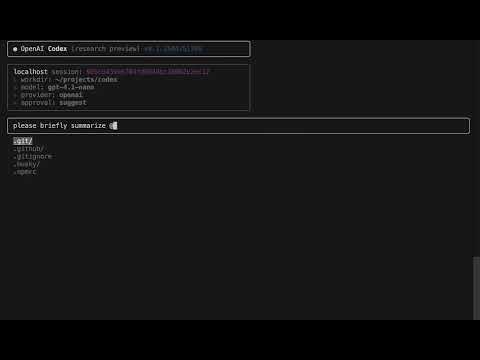](https://www.youtube.com/watch?v=vL4LqtBnqt8)
## Implementation Details
This PR consists of 2 main components:
1. **File Tag Utilities**:
- New `file-tag-utils.ts` utility module that handles both expansion and
collapsing of file tags
- `expandFileTags()` identifies `@path` tokens and replaces them with
XML blocks containing file contents
- `collapseXmlBlocks()` reverses the process, converting XML blocks back
to `@path` format for UI display
- Tokens are only expanded if they point to valid files (directories are
ignored)
- Expansion happens just before sending input to the model
2. **Terminal Chat Integration**:
- Leveraged the existing file system completion system for tabbing to
support the `@path` syntax
- Added `updateFsSuggestions` helper to manage filesystem suggestions
- Added `replaceFileSystemSuggestion` to replace input with filesystem
suggestions
- Applied `collapseXmlBlocks` in the chat response rendering so that
tagged files are shown as simple `@path` tags
The PR also includes test coverage for both the UI and the file tag
utilities.
## Next Steps
Some ideas I'd like to implement if this feature gets merged:
- Line selection: `@path[50:80]` to grab specific sections of files
- Method selection: `@path#methodName` to grab just one function/class
- Visual improvements: highlight file tags in the UI to make them more
noticeable
This pull request includes a change to improve the error message
displayed when there is insufficient quota in the `AgentLoop` class. The
updated message provides more detailed information and a link for
managing or purchasing credits.
Error message improvement:
*
[`codex-cli/src/utils/agent/agent-loop.ts`](diffhunk://#diff-b15957eac2720c3f1f55aa32f172cdd0ac6969caf4e7be87983df747a9f97083L1140-R1140):
Updated the error message in the `AgentLoop` class to include the
specific error message (if available) and a link to manage or purchase
credits.
Fixes#751
I suspect this was done originally so that `execForSandbox()` had a
consistent signature for both the `SandboxType.NONE` and
`SandboxType.MACOS_SEATBELT` cases, but that is not really necessary and
turns out to make the upcoming Landlock support a bit more complicated
to implement, so I had Codex remove it and clean up the call sites.


