Out of the box, we will make `/` the only official "escape sequence" for
commands in the Rust TUI. We will look to support `q` (or any string you
want to use as a "macro") via a plugin, but not make it part of the
default experience.

Existing `q` users will have to get by with `ctrl+d` for now.
https://github.com/openai/codex/pull/829 noted it introduced a circular
dep between `codex.rs` and `mcp_tool_call.rs`. This attempts to clean
things up: the circular dep still exists, but at least all the fields of
`Session` are private again.
This adds initial support for MCP servers in the style of Claude Desktop
and Cursor. Note this PR is the bare minimum to get things working end
to end: all configured MCP servers are launched every time Codex is run,
there is no recovery for MCP servers that crash, etc.

(Also, I took some shortcuts to change some fields of `Session` to be
`pub(crate)`, which also means there are circular deps between
`codex.rs` and `mcp_tool_call.rs`, but I will clean that up in a
subsequent PR.)

`codex-rs/README.md` is updated as part of this PR to explain how to use
this feature. There is a bit of plumbing to route the new settings from
`Config` to the business logic in `codex.rs`. The most significant
chunks for new code are in `mcp_connection_manager.rs` (which defines
the `McpConnectionManager` struct) and `mcp_tool_call.rs`, which is
responsible for tool calls.

This PR also introduces new `McpToolCallBegin` and `McpToolCallEnd`
event types to the protocol, but does not add any handlers for them.
(See https://github.com/openai/codex/pull/836 for initial usage.)

To test, I added the following to my `~/.codex/config.toml`:

```toml
# Local build of https://github.com/hideya/mcp-server-weather-js
[mcp_servers.weather]
command = "/Users/mbolin/code/mcp-server-weather-js/dist/index.js"
args = []
```

And then I ran the following:

```
codex-rs$ cargo run --bin codex exec 'what is the weather in san francisco'
[2025-05-06T22:40:05] Task started: 1
[2025-05-06T22:40:18] Agent message: Here’s the latest National Weather Service forecast for San Francisco (downtown, near 37.77° N, 122.42° W):

This Afternoon (Tue):
• Sunny, high near 69 °F
• West-southwest wind around 12 mph

Tonight:
• Partly cloudy, low around 52 °F
• SW wind 7–10 mph
...
```

Note that Codex itself is not able to make network calls, so it would
not normally be able to get live weather information like this. However,
the weather MCP is [currently] not run under the Codex sandbox, so it is
able to hit `api.weather.gov` and fetch current weather information.

---
[//]: # (BEGIN SAPLING FOOTER)
Stack created with [Sapling](https://sapling-scm.com). Best reviewed
with [ReviewStack](https://reviewstack.dev/openai/codex/pull/829).
* #836
* __->__ #829
I discovered that `cargo build` worked for the entire workspace, but not
for the `mcp-client` or `core` crates.

* `mcp-client` failed to build because it underspecified the set of
features it needed from `tokio`.
* `core` failed to build because it was using a "feature" of its own
crate in the default, no-feature version.

This PR fixes the builds and adds a check in CI to defend against this
sort of thing going forward.
Cleans up the signature for `new_stdio_client()` to more closely mirror
how MCP servers are declared in config files (`command`, `args`, `env`).
Also takes a cue from Claude Code where the MCP server is launched with
a restricted `env` so that it only includes "safe" things like `USER`
and `PATH` (see the `create_env_for_mcp_server()` function introduced in
this PR for details) by default, as it is common for developers to have
sensitive API keys present in their environment that should only be
forwarded to the MCP server when the user has explicitly configured it
to do so.

---
[//]: # (BEGIN SAPLING FOOTER)
Stack created with [Sapling](https://sapling-scm.com). Best reviewed
with [ReviewStack](https://reviewstack.dev/openai/codex/pull/831).
* #829
* __->__ #831
This PR introduces an initial `McpClient` that we will use to give Codex
itself programmatic access to foreign MCPs. This does not wire it up in
Codex itself yet, but the new `mcp-client` crate includes a `main.rs`
for basic testing for now.

Manually tested by sending a `tools/list` request to Codex's own MCP
server:

```
codex-rs$ cargo build
codex-rs$ cargo run --bin codex-mcp-client ./target/debug/codex-mcp-server
{
  "tools": [
    {
      "description": "Run a Codex session. Accepts configuration parameters matching the Codex Config struct.",
      "inputSchema": {
        "properties": {
          "approval-policy": {
            "description": "Execution approval policy expressed as the kebab-case variant name (`unless-allow-listed`, `auto-edit`, `on-failure`, `never`).",
            "enum": [
              "auto-edit",
              "unless-allow-listed",
              "on-failure",
              "never"
            ],
            "type": "string"
          },
          "cwd": {
            "description": "Working directory for the session. If relative, it is resolved against the server process's current working directory.",
            "type": "string"
          },
          "disable-response-storage": {
            "description": "Disable server-side response storage.",
            "type": "boolean"
          },
          "model": {
            "description": "Optional override for the model name (e.g. \"o3\", \"o4-mini\")",
            "type": "string"
          },
          "prompt": {
            "description": "The *initial user prompt* to start the Codex conversation.",
            "type": "string"
          },
          "sandbox-permissions": {
            "description": "Sandbox permissions using the same string values accepted by the CLI (e.g. \"disk-write-cwd\", \"network-full-access\").",
            "items": {
              "enum": [
                "disk-full-read-access",
                "disk-write-cwd",
                "disk-write-platform-user-temp-folder",
                "disk-write-platform-global-temp-folder",
                "disk-full-write-access",
                "network-full-access"
              ],
              "type": "string"
            },
            "type": "array"
          }
        },
        "required": [
          "prompt"
        ],
        "type": "object"
      },
      "name": "codex"
    }
  ]
}
```
This Pull Request addresses an issue where the output of commands
executed in the raw-exec utility was being truncated due to restrictive
limits on the number of lines and bytes collected. The truncation caused
the message [Output truncated: too many lines or bytes] to appear when
processing large outputs, which could hinder the functionality of the
CLI.

Changes Made

Increased the maximum output limits in the
[createTruncatingCollector](https://github.com/openai/codex/pull/575)
utility:
Bytes: Increased from 10 KB to 100 KB.
Lines: Increased from 256 lines to 1024 lines.
Installed the @types/node package to resolve missing type definitions
for [NodeJS](https://github.com/openai/codex/pull/575) and
[Buffer](https://github.com/openai/codex/pull/575).
Verified and fixed any related errors in the
[createTruncatingCollector](https://github.com/openai/codex/pull/575)
implementation.

Issue Solved:

This PR ensures that larger outputs can be processed without truncation,
improving the usability of the CLI for commands that generate extensive
output. https://github.com/openai/codex/issues/509

---------

Co-authored-by: Michael Bolin <bolinfest@gmail.com>
This PR replaces the placeholder `"echo"` tool call in the MCP server
with a `"codex"` tool that calls Codex. Events such as
`ExecApprovalRequest` and `ApplyPatchApprovalRequest` are not handled
properly yet, but I have `approval_policy = "never"` set in my
`~/.codex/config.toml` such that those codepaths are not exercised.

The schema for this MPC tool is defined by a new `CodexToolCallParam`
struct introduced in this PR. It is fairly similar to `ConfigOverrides`,
as the param is used to help create the `Config` used to start the Codex
session, though it also includes the `prompt` used to kick off the
session.

This PR also introduces the use of the third-party `schemars` crate to
generate the JSON schema, which is verified in the
`verify_codex_tool_json_schema()` unit test.

Events that are dispatched during the Codex session are sent back to the
MCP client as MCP notifications. This gives the client a way to monitor
progress as the tool call itself may take minutes to complete depending
on the complexity of the task requested by the user.

In the video below, I launched the server via:

```shell
mcp-server$ RUST_LOG=debug npx @modelcontextprotocol/inspector cargo run --
```

In the video, you can see the flow of:

* requesting the list of tools
* choosing the **codex** tool
* entering a value for **prompt** and then making the tool call

Note that I left the other fields blank because when unspecified, the
values in my `~/.codex/config.toml` were used:


https://github.com/user-attachments/assets/1975058c-b004-43ef-8c8d-800a953b8192

Note that while using the inspector, I did run into
https://github.com/modelcontextprotocol/inspector/issues/293, though the
tip about ensuring I had only one instance of the **MCP Inspector** tab
open in my browser seemed to fix things.
https://github.com/openai/codex/pull/800 kicked off some work to be more
disciplined about honoring the `cwd` param passed in rather than
assuming `std::env::current_dir()` as the `cwd`. As part of this, we
need to ensure `apply_patch` calls honor the appropriate `cwd` as well,
which is significant if the paths in the `apply_patch` arg are not
absolute paths themselves. Failing that:

- The `apply_patch` function call can contain an optional`workdir`
param, so:
- If specified and is an absolute path, it should be used to resolve
relative paths
- If specified and is a relative path, should be resolved against
`Config.cwd` and then any relative paths will be resolved against the
result
- If `workdir` is not specified on the function call, relative paths
should be resolved against `Config.cwd`

Note that we had a similar issue in the TypeScript CLI that was fixed in
https://github.com/openai/codex/pull/556.

As part of the fix, this PR introduces `ApplyPatchAction` so clients can
deal with that instead of the raw `HashMap<PathBuf,
ApplyPatchFileChange>`. This enables us to enforce, by construction,
that all paths contained in the `ApplyPatchAction` are absolute paths.
https://github.com/openai/codex/pull/800 made `cwd` a property of
`Config` and made it so the `cwd` is not necessarily
`std::env::current_dir()`. As such, `is_inside_git_repo()` should check
`Config.cwd` rather than `std::env::current_dir()`.

This PR updates `is_inside_git_repo()` to take `Config` instead of an
arbitrary `PathBuf` to force the check to operate on a `Config` where
`cwd` has been resolved to what the user specified.
In order to expose Codex via an MCP server, I realized that we should be
taking `cwd` as a parameter rather than assuming
`std::env::current_dir()` as the `cwd`. Specifically, the user may want
to start a session in a directory other than the one where the MCP
server has been started.

This PR makes `cwd: PathBuf` a required field of `Session` and threads
it all the way through, though I think there is still an issue with not
honoring `workdir` for `apply_patch`, which is something we also had to
fix in the TypeScript version: https://github.com/openai/codex/pull/556.

This also adds `-C`/`--cd` to change the cwd via the command line.

To test, I ran:

```
cargo run --bin codex -- exec -C /tmp 'show the output of ls'
```

and verified it showed the contents of my `/tmp` folder instead of
`$PWD`.
https://github.com/openai/codex/pull/793 had important information on
the `notify` config option that seemed worth memorializing, so this PR
updates the documentation about all of the configurable options in
`~/.codex/config.toml`.
With this change, you can specify a program that will be executed to get
notified about events generated by Codex. The notification info will be
packaged as a JSON object. The supported notification types are defined
by the `UserNotification` enum introduced in this PR. Initially, it
contains only one variant, `AgentTurnComplete`:

```rust
pub(crate) enum UserNotification {
    #[serde(rename_all = "kebab-case")]
    AgentTurnComplete {
        turn_id: String,

        /// Messages that the user sent to the agent to initiate the turn.
        input_messages: Vec<String>,

        /// The last message sent by the assistant in the turn.
        last_assistant_message: Option<String>,
    },
}
```

This is intended to support the common case when a "turn" ends, which
often means it is now your chance to give Codex further instructions.

For example, I have the following in my `~/.codex/config.toml`:

```toml
notify = ["python3", "/Users/mbolin/.codex/notify.py"]
```

I created my own custom notifier script that calls out to
[terminal-notifier](https://github.com/julienXX/terminal-notifier) to
show a desktop push notification on macOS. Contents of `notify.py`:

```python
#!/usr/bin/env python3

import json
import subprocess
import sys


def main() -> int:
    if len(sys.argv) != 2:
        print("Usage: notify.py <NOTIFICATION_JSON>")
        return 1

    try:
        notification = json.loads(sys.argv[1])
    except json.JSONDecodeError:
        return 1

    match notification_type := notification.get("type"):
        case "agent-turn-complete":
            assistant_message = notification.get("last-assistant-message")
            if assistant_message:
                title = f"Codex: {assistant_message}"
            else:
                title = "Codex: Turn Complete!"
            input_messages = notification.get("input_messages", [])
            message = " ".join(input_messages)
            title += message
        case _:
            print(f"not sending a push notification for: {notification_type}")
            return 0

    subprocess.check_output(
        [
            "terminal-notifier",
            "-title",
            title,
            "-message",
            message,
            "-group",
            "codex",
            "-ignoreDnD",
            "-activate",
            "com.googlecode.iterm2",
        ]
    )

    return 0


if __name__ == "__main__":
    sys.exit(main())
```

For reference, here are related PRs that tried to add this functionality
to the TypeScript version of the Codex CLI:

* https://github.com/openai/codex/pull/160
* https://github.com/openai/codex/pull/498
While creating a basic MCP server in
https://github.com/openai/codex/pull/792, I discovered a number of bugs
with the initial `mcp-types` crate that I needed to fix in order to
implement the server.

For example, I discovered that when serializing a message, `"jsonrpc":
"2.0"` was not being included.

I changed the codegen so that the field is added as:

```rust
    #[serde(rename = "jsonrpc", default = "default_jsonrpc")]
    pub jsonrpc: String,
```

This ensures that the field is serialized as `"2.0"`, though the field
still has to be assigned, which is tedious. I may experiment with
`Default` or something else in the future. (I also considered creating a
custom serializer, but I'm not sure it's worth the trouble.)

While here, I also added `MCP_SCHEMA_VERSION` and `JSONRPC_VERSION` as
`pub const`s for the crate.

I also discovered that MCP rejects sending `null` for optional fields,
so I had to add `#[serde(skip_serializing_if = "Option::is_none")]` on
`Option` fields.

---
[//]: # (BEGIN SAPLING FOOTER)
Stack created with [Sapling](https://sapling-scm.com). Best reviewed
with [ReviewStack](https://reviewstack.dev/openai/codex/pull/791).
* #792
* __->__ #791
This adds our own `mcp-types` crate to our Cargo workspace. We vendor in
the
[`2025-03-26/schema.json`](05f2045136/schema/2025-03-26/schema.json)
from the MCP repo and introduce a `generate_mcp_types.py` script to
codegen the `lib.rs` from the JSON schema.

Test coverage is currently light, but I plan to refine things as we
start making use of this crate.

And yes, I am aware that
https://github.com/modelcontextprotocol/rust-sdk exists, though the
published https://crates.io/crates/rmcp appears to be a competing
effort. While things are up in the air, it seems better for us to
control our own version of this code.

Incidentally, Codex did a lot of the work for this PR. I told it to
never edit `lib.rs` directly and instead to update
`generate_mcp_types.py` and then re-run it to update `lib.rs`. It
followed these instructions and once things were working end-to-end, I
iteratively asked for changes to the tests until the API looked
reasonable (and the code worked). Codex was responsible for figuring out
what to do to `generate_mcp_types.py` to achieve the requested test/API
changes.
Building on top of https://github.com/openai/codex/pull/757, this PR
updates Codex to use the Landlock executor binary for sandboxing in the
Node.js CLI. Note that Codex has to be invoked with either `--full-auto`
or `--auto-edit` to activate sandboxing. (Using `--suggest` or
`--dangerously-auto-approve-everything` ensures the sandboxing codepath
will not be exercised.)
When I tested this on a Linux host (specifically, `Ubuntu 24.04.1 LTS`),
things worked as expected: I ran Codex CLI with `--full-auto` and then
asked it to do `echo 'hello mbolin' into hello_world.txt` and it
succeeded without prompting me.
However, in my testing, I discovered that the sandboxing did *not* work
when using `--full-auto` in a Linux Docker container from a macOS host.
I updated the code to throw a detailed error message when this happens:

This introduces `./codex-cli/scripts/stage_release.sh`, which is a shell
script that stages a release for the Node.js module in a temp directory.
It updates the release to include these native binaries:

```
bin/codex-linux-sandbox-arm64
bin/codex-linux-sandbox-x64
```

though this PR does not update Codex CLI to use them yet.

When doing local development, run
`./codex-cli/scripts/install_native_deps.sh` to install these in your
own `bin/` folder.

This PR also updates `README.md` to document the new workflow.

---
[//]: # (BEGIN SAPLING FOOTER)
Stack created with [Sapling](https://sapling-scm.com). Best reviewed
with [ReviewStack](https://reviewstack.dev/openai/codex/pull/757).
* #763
* __->__ #757
## `0.1.2504301751`

### 🚀 Features

- User config api key (#569)
- `@mention` files in codex (#701)
- Add `--reasoning` CLI flag (#314)
- Lower default retry wait time and increase number of tries (#720)
- Add common package registries domains to allowed-domains list (#414)

### 🪲 Bug Fixes

- Insufficient quota message (#758)
- Input keyboard shortcut opt+delete (#685)
- `/diff` should include untracked files (#686)
- Only allow running without sandbox if explicitly marked in safe
container (#699)
- Tighten up check for /usr/bin/sandbox-exec (#710)
- Check if sandbox-exec is available (#696)
- Duplicate messages in quiet mode (#680)
Solves #700
## State of the World Before
Prior to this PR, when users wanted to share file contents with Codex,
they had two options:
- Manually copy and paste file contents into the chat
- Wait for the assistant to use the shell tool to view the file
The second approach required the assistant to:
1. Recognize the need to view a file
2. Execute a shell tool call
3. Wait for the tool call to complete
4. Process the file contents
This consumed extra tokens and reduced user control over which files
were shared with the model.
## State of the World After
With this PR, users can now:
- Reference files directly in their chat input using the `@path` syntax
- Have file contents automatically expanded into XML blocks before being
sent to the LLM
For example, users can type `@src/utils/config.js` in their message, and
the file contents will be included in context. Within the terminal chat
history, these file blocks will be collapsed back to `@path` format in
the UI for clean presentation.
Tag File suggestions:
<img width="857" alt="file-suggestions"
src="https://github.com/user-attachments/assets/397669dc-ad83-492d-b5f0-164fab2ff4ba"
/>
Tagging files in action:
<img width="858" alt="tagging-files"
src="https://github.com/user-attachments/assets/0de9d559-7b7f-4916-aeff-87ae9b16550a"
/>
Demo video of file tagging:
[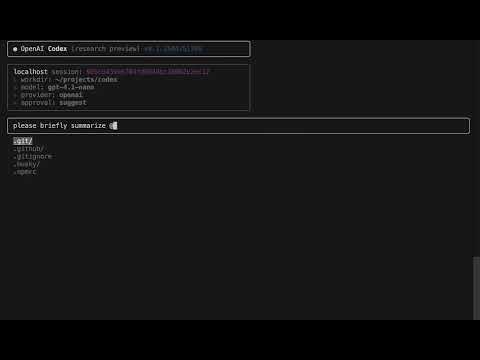](https://www.youtube.com/watch?v=vL4LqtBnqt8)
## Implementation Details
This PR consists of 2 main components:
1. **File Tag Utilities**:
- New `file-tag-utils.ts` utility module that handles both expansion and
collapsing of file tags
- `expandFileTags()` identifies `@path` tokens and replaces them with
XML blocks containing file contents
- `collapseXmlBlocks()` reverses the process, converting XML blocks back
to `@path` format for UI display
- Tokens are only expanded if they point to valid files (directories are
ignored)
- Expansion happens just before sending input to the model
2. **Terminal Chat Integration**:
- Leveraged the existing file system completion system for tabbing to
support the `@path` syntax
- Added `updateFsSuggestions` helper to manage filesystem suggestions
- Added `replaceFileSystemSuggestion` to replace input with filesystem
suggestions
- Applied `collapseXmlBlocks` in the chat response rendering so that
tagged files are shown as simple `@path` tags
The PR also includes test coverage for both the UI and the file tag
utilities.
## Next Steps
Some ideas I'd like to implement if this feature gets merged:
- Line selection: `@path[50:80]` to grab specific sections of files
- Method selection: `@path#methodName` to grab just one function/class
- Visual improvements: highlight file tags in the UI to make them more
noticeable
This pull request includes a change to improve the error message
displayed when there is insufficient quota in the `AgentLoop` class. The
updated message provides more detailed information and a link for
managing or purchasing credits.
Error message improvement:
*
[`codex-cli/src/utils/agent/agent-loop.ts`](diffhunk://#diff-b15957eac2720c3f1f55aa32f172cdd0ac6969caf4e7be87983df747a9f97083L1140-R1140):
Updated the error message in the `AgentLoop` class to include the
specific error message (if available) and a link to manage or purchase
credits.
Fixes#751
I suspect this was done originally so that `execForSandbox()` had a
consistent signature for both the `SandboxType.NONE` and
`SandboxType.MACOS_SEATBELT` cases, but that is not really necessary and
turns out to make the upcoming Landlock support a bit more complicated
to implement, so I had Codex remove it and clean up the call sites.
Apparently the URLs for draft releases cannot be downloaded using
unauthenticated `curl`, which means the DotSlash file only works for
users who are authenticated with `gh`. According to chat, prereleases
_can_ be fetched with unauthenticated `curl`, so let's try that.
For now, keep things simple such that we never update the `version` in
the `Cargo.toml` for the workspace root on the `main` branch. Instead,
create a new branch for a release, push one commit that updates the
`version`, and then tag that branch to kick off a release.

To test, I ran this script and created this release job:

https://github.com/openai/codex/actions/runs/14762580641
The generated DotSlash file has URLs that refer to
`https://github.com/openai/codex/releases/`, so let's set
`prerelease:false` (but keep `draft:true` for now) so those URLs should
work.

Also updated `version` in Cargo workspace so I will kick off a build
once this lands.
I am working to simplify the build process. As a first step, update
`session.ts` so it reads the `version` from `package.json` at runtime so
we no longer have to modify it during the build process. I want to get
to a place where the build looks like:

```
cd codex-cli
pnpm i
pnpm build
RELEASE_DIR=$(mktemp -d)
cp -r bin "$RELEASE_DIR/bin"
cp -r dist "$RELEASE_DIR/dist"
cp -r src "$RELEASE_DIR/src" # important if we want sourcemaps to continue to work
cp ../README.md "$RELEASE_DIR"
VERSION=$(printf '0.1.%d' $(date +%y%m%d%H%M))
jq --arg version "$VERSION" '.version = $version' package.json > "$RELEASE_DIR/package.json"
```

Then the contents of `$RELEASE_DIR` should be good to `npm publish`, no?
@oai-ragona and I discussed it, and we feel the REPL crate has served
its purpose, so we're going to delete the code and future archaeologists
can find it in Git history.
Apparently I made two key mistakes in
https://github.com/openai/codex/pull/740 (fixed in this PR):

* I forgot to redefine `$dest` in the `Stage Linux-only artifacts` step
* I did not define the `if` check correctly in the `Stage Linux-only
artifacts` step

This fixes both of those issues and bumps the workspace version to
`0.0.2504292006` in preparation for another release attempt.
This introduces a standalone executable that run the equivalent of the
`codex debug landlock` subcommand and updates `rust-release.yml` to
include it in the release.

The idea is that we will include this small binary with the TypeScript
CLI to provide support for Linux sandboxing.
Taking a pass at building artifacts per platform so we can consider
different distribution strategies that don't require users to install
the full `cargo` toolchain.

Right now this grabs just the `codex-repl` and `codex-tui` bins for 5
different targets and bundles them into a draft release. I think a
clearly marked pre-release set of artifacts will unblock the next step
of testing.
Previous to this PR, `SandboxPolicy` was a bit difficult to work with:


237f8a11e1/codex-rs/core/src/protocol.rs (L98-L108)

Specifically:

* It was an `enum` and therefore options were mutually exclusive as
opposed to additive.
* It defined things in terms of what the agent _could not_ do as opposed
to what they _could_ do. This made things hard to support because we
would prefer to build up a sandbox config by starting with something
extremely restrictive and only granting permissions for things the user
as explicitly allowed.

This PR changes things substantially by redefining the policy in terms
of two concepts:

* A `SandboxPermission` enum that defines permissions that can be
granted to the agent/sandbox.
* A `SandboxPolicy` that internally stores a `Vec<SandboxPermission>`,
but externally exposes a simpler API that can be used to configure
Seatbelt/Landlock.

Previous to this PR, we supported a `--sandbox` flag that effectively
mapped to an enum value in `SandboxPolicy`. Though now that
`SandboxPolicy` is a wrapper around `Vec<SandboxPermission>`, the single
`--sandbox` flag no longer makes sense. While I could have turned it
into a flag that the user can specify multiple times, I think the
current values to use with such a flag are long and potentially messy,
so for the moment, I have dropped support for `--sandbox` altogether and
we can bring it back once we have figured out the naming thing.

Since `--sandbox` is gone, users now have to specify `--full-auto` to
get a sandbox that allows writes in `cwd`. Admittedly, there is no clean
way to specify the equivalent of `--full-auto` in your `config.toml`
right now, so we will have to revisit that, as well.

Because `Config` presents a `SandboxPolicy` field and `SandboxPolicy`
changed considerably, I had to overhaul how config loading works, as
well. There are now two distinct concepts, `ConfigToml` and `Config`:

* `ConfigToml` is the deserialization of `~/.codex/config.toml`. As one
might expect, every field is `Optional` and it is `#[derive(Deserialize,
Default)]`. Consistent use of `Optional` makes it clear what the user
has specified explicitly.
* `Config` is the "normalized config" and is produced by merging
`ConfigToml` with `ConfigOverrides`. Where `ConfigToml` contains a raw
`Option<Vec<SandboxPermission>>`, `Config` presents only the final
`SandboxPolicy`.

The changes to `core/src/exec.rs` and `core/src/linux.rs` merit extra
special attention to ensure we are faithfully mapping the
`SandboxPolicy` to the Seatbelt and Landlock configs, respectively.

Also, take note that `core/src/seatbelt_readonly_policy.sbpl` has been
renamed to `codex-rs/core/src/seatbelt_base_policy.sbpl` and that
`(allow file-read*)` has been removed from the `.sbpl` file as now this
is added to the policy in `core/src/exec.rs` when
`sandbox_policy.has_full_disk_read_access()` is `true`.
The saveConfig() function only includes a hardcoded subset of properties
when writing the config file. Any property not explicitly listed (like
disableResponseStorage) will be dropped.
I have added `disableResponseStorage` to the `configToSave` object as
the immediate fix.

[Linking Issue this fixes.](https://github.com/openai/codex/issues/726)


